Luxury jewelry packaging is no longer just a protective box—it has become an extension of brand identity, customer experience, and sustainability commitment. As the global luxury market continues to evolve, jewelry brands are investing more heavily in packaging that reflects craftsmanship, exclusivity, and environmental responsibility.
According to Bain & Company’s Luxury Study, the global personal luxury goods market remains valued at approximately €358 billion, with jewelry continuing to be one of the strongest-performing categories. Meanwhile, younger luxury consumers increasingly expect brands to deliver personalized experiences, sustainable materials, and digital transparency.
For jewelry brands, packaging is no longer a secondary consideration. It has become a strategic tool for enhancing perceived value, building customer loyalty, and differentiating products in a competitive market.
Here are the seven luxury jewelry packaging trends shaping premium brands in 2026.
1. Sustainable Luxury Becomes the New Standard
Sustainability has moved from a marketing advantage to a business requirement.
Modern luxury consumers increasingly expect brands to reduce environmental impact without sacrificing quality or elegance. As a result, luxury jewelry packaging is shifting toward:
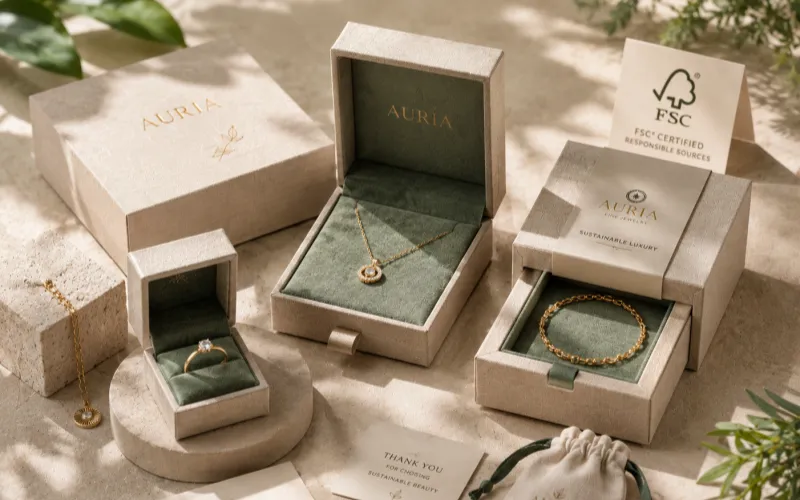
- FSC-certified paperboard
- Recycled rigid boxes
- Plastic-free inserts
- Soy-based printing inks
- Biodegradable protective materials
Research from McKinsey’s Global Packaging Survey shows that a significant portion of consumers worldwide are willing to pay a premium for sustainable packaging. This trend is particularly strong among younger luxury buyers who prioritize environmental responsibility alongside product quality.
For jewelry brands, sustainable packaging now communicates premium values rather than compromise.
Packaging Solutions
- FSC-certified jewelry boxes
- Recyclable rigid setup boxes
- Molded pulp inserts
- Reusable gift packaging
2. Personalized Packaging Creates Emotional Connections
Jewelry is inherently emotional.
Whether purchased for an engagement, anniversary, birthday, or personal milestone, jewelry often represents meaningful moments. Packaging that reflects these emotions enhances the overall customer experience.
In 2026, personalized packaging is becoming increasingly popular through:
- Foil-stamped names
- Custom messages
- Personalized thank-you cards
- Branded ribbon systems
- Customized color schemes
- QR-linked digital greetings
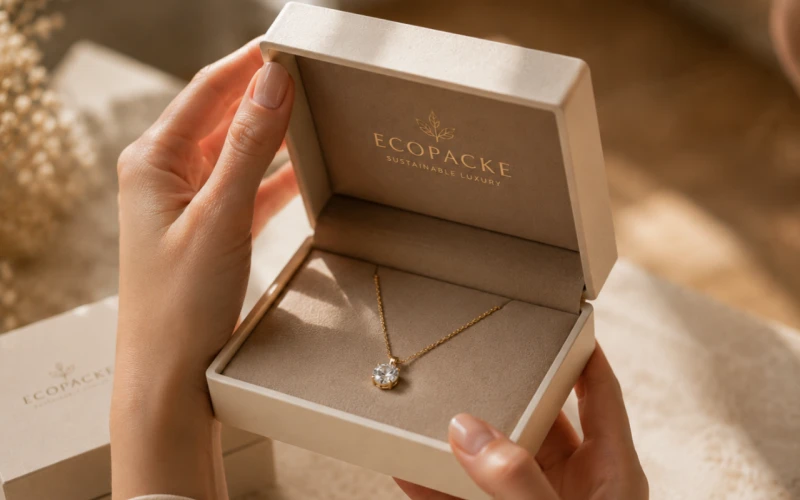
Personalized packaging transforms a jewelry box from a container into a memorable keepsake.
Luxury consumers increasingly value experiences that feel unique and tailored to them, making customization a key packaging investment for premium brands.
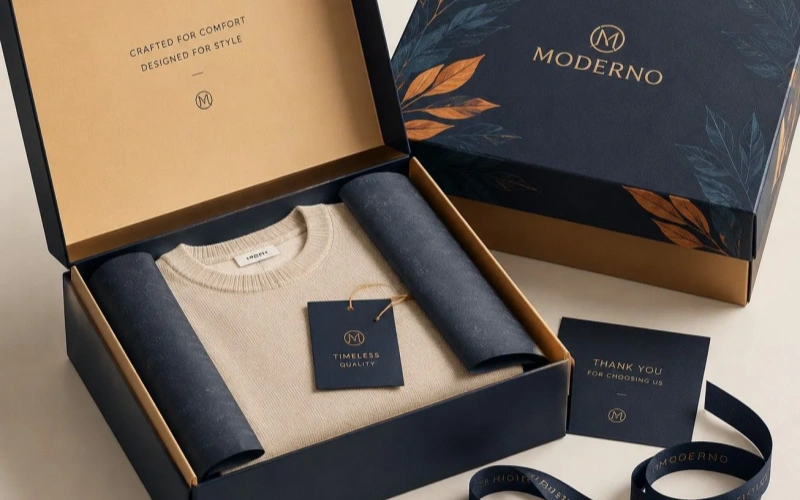
3. Premium Unboxing Experiences Drive Social Sharing
Social media continues to influence luxury purchasing behavior.
Platforms such as Instagram, TikTok, and Pinterest have elevated the importance of unboxing experiences. A beautifully designed jewelry box can generate user-generated content and increase brand visibility organically.
Popular unboxing-focused packaging features include:
- Magnetic closure rigid boxes
- Multi-layer reveal structures
- Soft-touch lamination
- Satin ribbon pull tabs
- Hidden compartments
- Premium interior lighting effects
The goal is simple:
Create a memorable opening experience that mirrors the excitement of receiving the jewelry itself.
For luxury brands, the unboxing journey has become an extension of product storytelling.
4. Reusable Jewelry Packaging Gains Popularity
Consumers increasingly prefer packaging that serves a purpose beyond the initial purchase.
Rather than disposable packaging, brands are designing jewelry boxes that customers can reuse for:
- Jewelry storage
- Travel organization
- Gift presentation
- Home décor applications
This trend aligns perfectly with the growing circular economy movement.
Reusable packaging extends brand visibility long after the sale while reducing waste generation.
Luxury jewelry boxes with premium construction, velvet-lined interiors, and durable rigid structures are becoming a preferred solution for both brands and consumers.
5. Smart Packaging Enhances Authentication and Trust
Counterfeit products remain a challenge for luxury brands.
To combat this issue, jewelry packaging is increasingly integrating smart technologies that improve authenticity verification and product traceability.
Emerging solutions include:
- NFC chips
- QR-code verification
- Digital certificates
- Blockchain authentication
- Product registration systems
Consumers can instantly access:
- Product authenticity records
- Material sourcing information
- Warranty documentation
- Brand history
- Care instructions
Smart packaging helps luxury brands protect their reputation while providing customers with greater confidence in their purchases.
6. Digital Product Passports (DPP) Will Influence Future Packaging
One of the most significant developments affecting luxury packaging is the emergence of Digital Product Passports (DPP).
Driven by European sustainability regulations, DPP systems are designed to provide transparent information about products throughout their lifecycle.
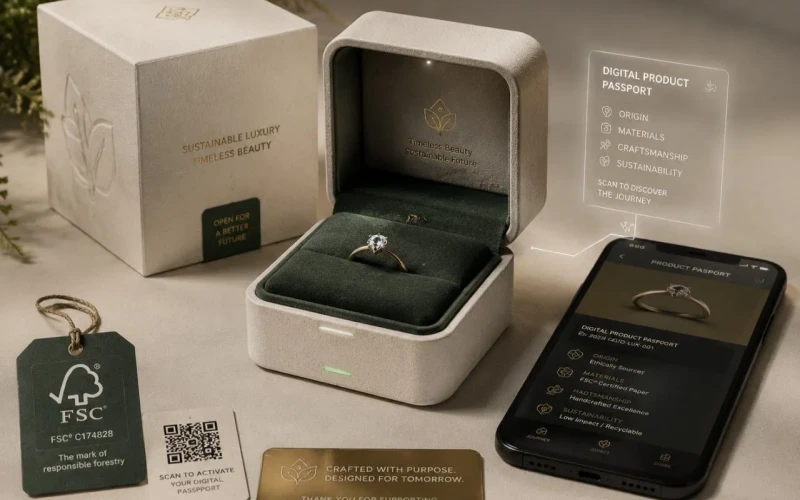
Future jewelry packaging may include QR codes or NFC-enabled access to information such as:
- Material origin
- Precious metal sourcing
- Manufacturing data
- Sustainability credentials
- Recycling guidance
For jewelry brands selling into European markets, preparing for DPP integration may become an important competitive advantage.
Forward-thinking packaging manufacturers are already developing packaging structures capable of supporting future traceability requirements.
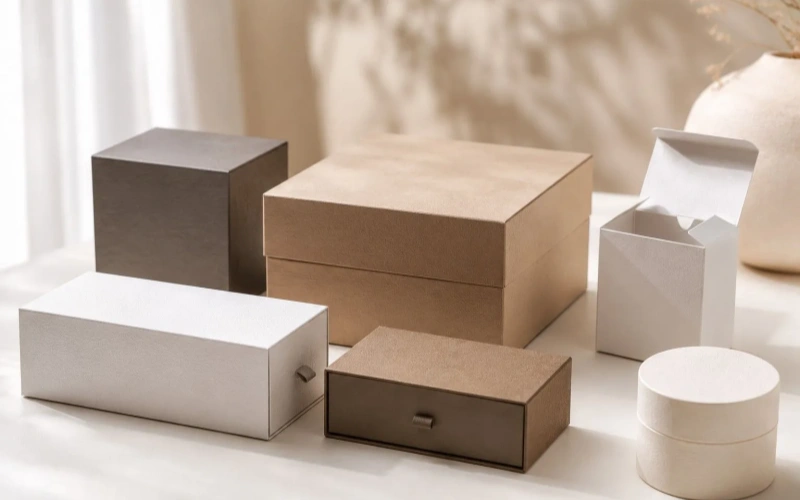
7. Quiet Luxury Design Continues to Dominate
The era of excessive decoration is fading.
Luxury consumers increasingly favor understated elegance over visual extravagance.
The “Quiet Luxury” aesthetic is influencing jewelry packaging through:
- Neutral color palettes
- Minimal branding
- Soft-touch finishes
- Matte textures
- Debossed logos
- Clean structural design
Popular colors in 2026 include:
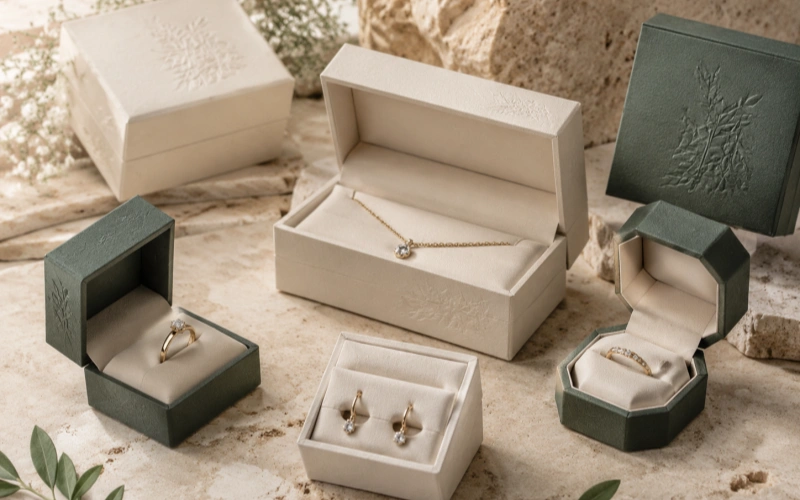
- Ivory white
- Stone gray
- Warm beige
- Deep forest green
- Matte black
This minimalist approach allows the jewelry itself to remain the focal point while reinforcing a sophisticated brand image.
How Jewelry Brands Can Choose the Right Packaging Partner
Selecting the right packaging manufacturer is becoming just as important as selecting the right materials.
When evaluating suppliers, jewelry brands should consider:
Sustainability Credentials
- FSC certification
- Recycled material availability
- Eco-friendly printing options
Customization Capabilities
- Structural design support
- Custom inserts
- Luxury finishing techniques
Production Flexibility
- Low MOQ options
- Sampling services
- Global shipping capabilities
Innovation Support
- Smart packaging integration
- NFC and QR solutions
- Future DPP compatibility
The right packaging partner can help transform packaging from a cost center into a powerful brand-building tool.
Conclusion
Luxury jewelry packaging in 2026 is defined by a balance of sustainability, personalization, technology, and timeless design.
As consumer expectations continue to evolve, brands that invest in premium packaging experiences will be better positioned to strengthen customer loyalty, enhance perceived value, and stand out in an increasingly competitive luxury market.
From FSC-certified rigid boxes and reusable packaging solutions to smart authentication technologies and Digital Product Passports, the future of luxury jewelry packaging is not simply about protecting products—it is about telling stories, building trust, and creating memorable brand experiences.
Order small-batch custom packaging effortlessly with Ecopacke. Our platform offers custom packaging starting at only 100 units. Design luxury-level branded packaging easily, no matter your business size.