Luxury is no longer about excess.
Today’s premium consumers increasingly associate luxury with:
- Exceptional craftsmanship
- Authentic brand storytelling
- Responsible sourcing
- Timeless design
- Environmental awareness
- Emotional connection
Rather than seeing sustainability as the opposite of luxury, consumers now expect both to coexist.
According to market research from consulting firms including McKinsey and Deloitte, younger luxury consumers—particularly Millennials and Generation Z—are significantly more likely to support brands that demonstrate genuine environmental responsibility.
For jewelry brands, packaging becomes one of the first tangible demonstrations of these values.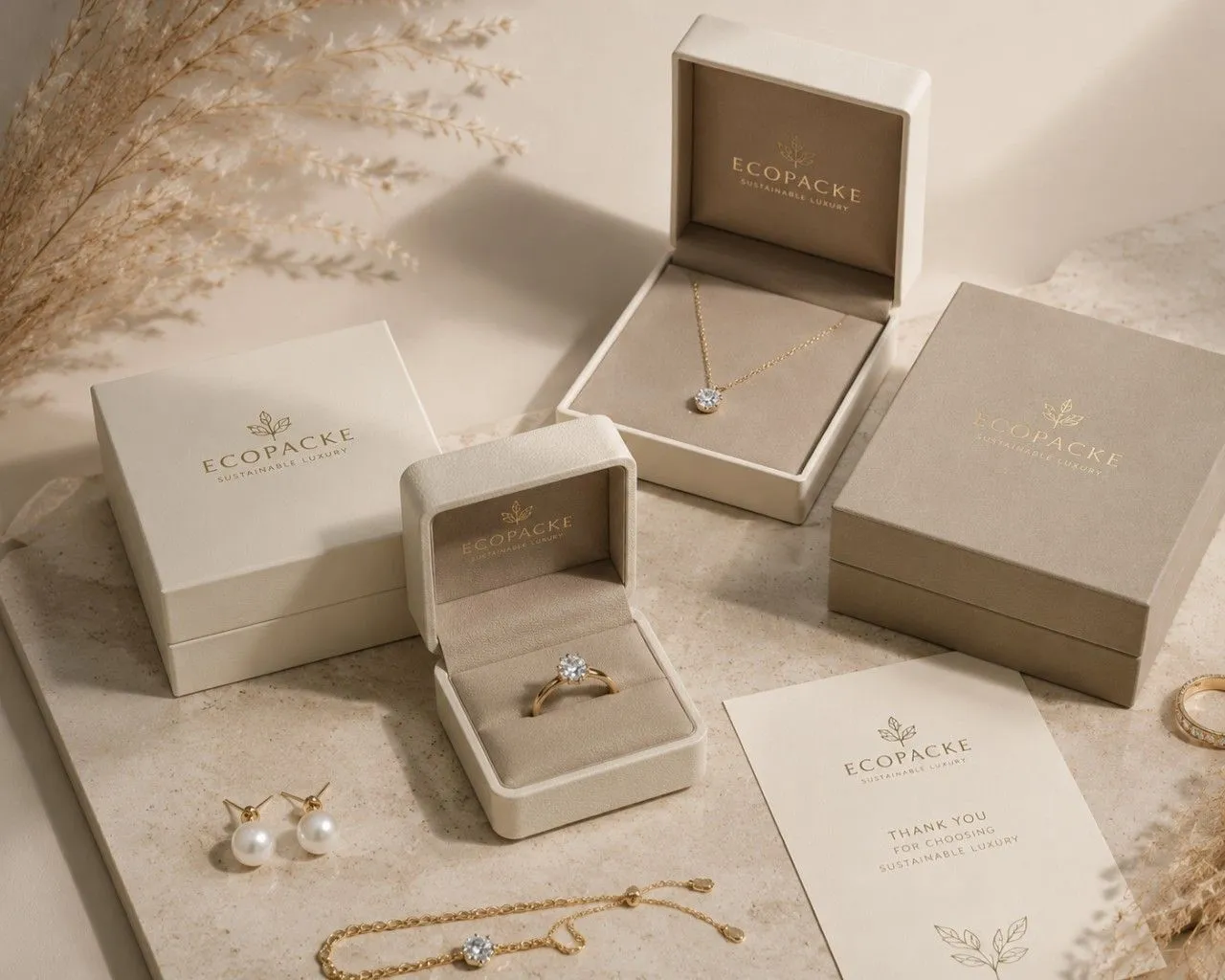
Consumers don’t just evaluate jewelry.
They evaluate the entire experience.
A luxury ring may be beautifully crafted, but if it arrives in excessive plastic packaging or low-quality materials, the overall perception of the brand declines.
Modern buyers increasingly ask questions like:
- Is this box recyclable?
- Was the paper responsibly sourced?
- Does this brand care about the environment?
- Is the packaging reusable?
- Does the packaging feel premium without being wasteful?
These questions influence trust before customers even wear the jewelry.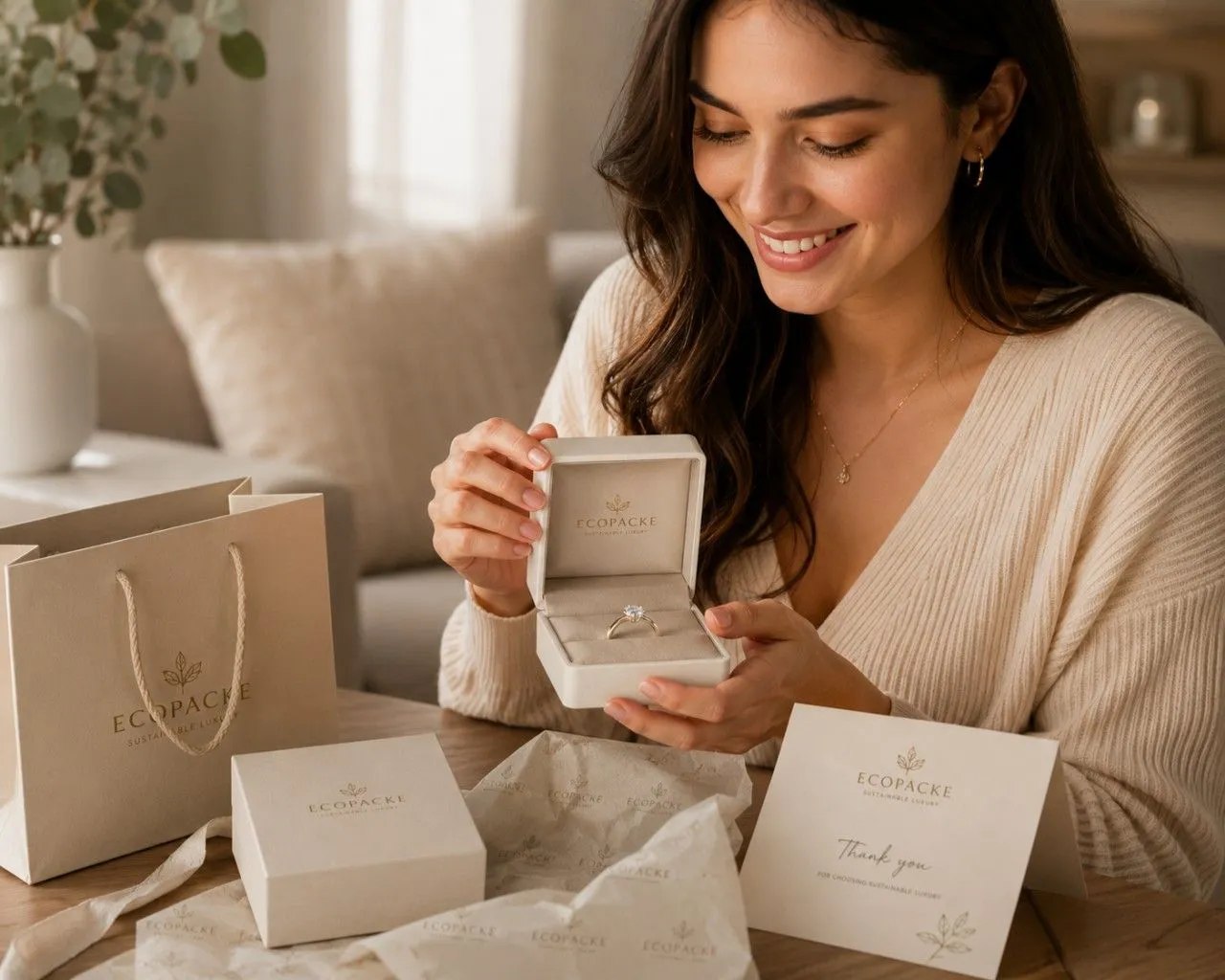
Packaging Shapes First Impressions
Research in consumer psychology consistently shows that first impressions are formed within seconds.
Packaging affects perceived value through several psychological mechanisms:
Visual Quality
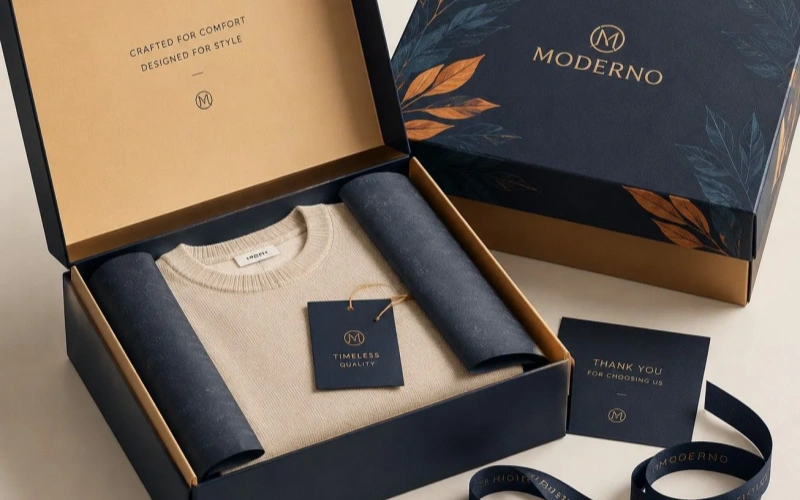
Premium textures, clean typography, and sophisticated colors immediately communicate luxury.
Tactile Experience
Soft-touch paper, rigid construction, magnetic closures, and precision finishing create a sense of craftsmanship.
Emotional Anticipation
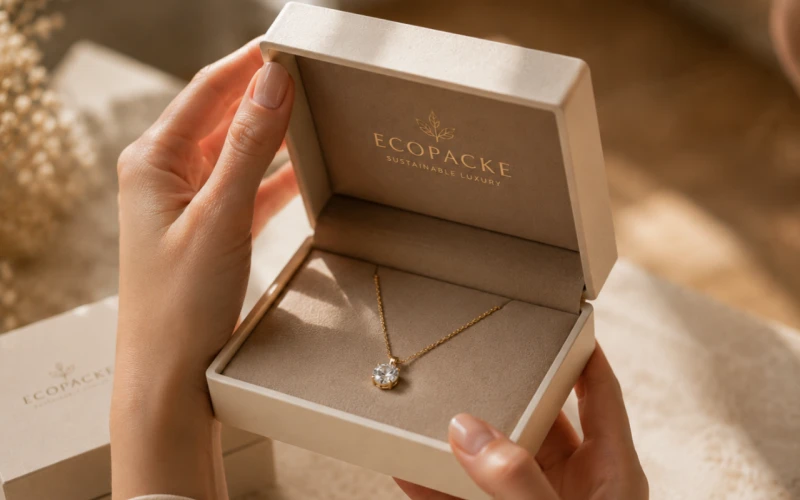
Opening an elegant jewelry box creates excitement that becomes associated with the brand itself.
Value Justification
Premium packaging helps customers feel their purchase was worth the investment.
Eco-friendly materials no longer limit these experiences.
Today’s sustainable materials offer luxury finishes comparable to traditional premium packaging.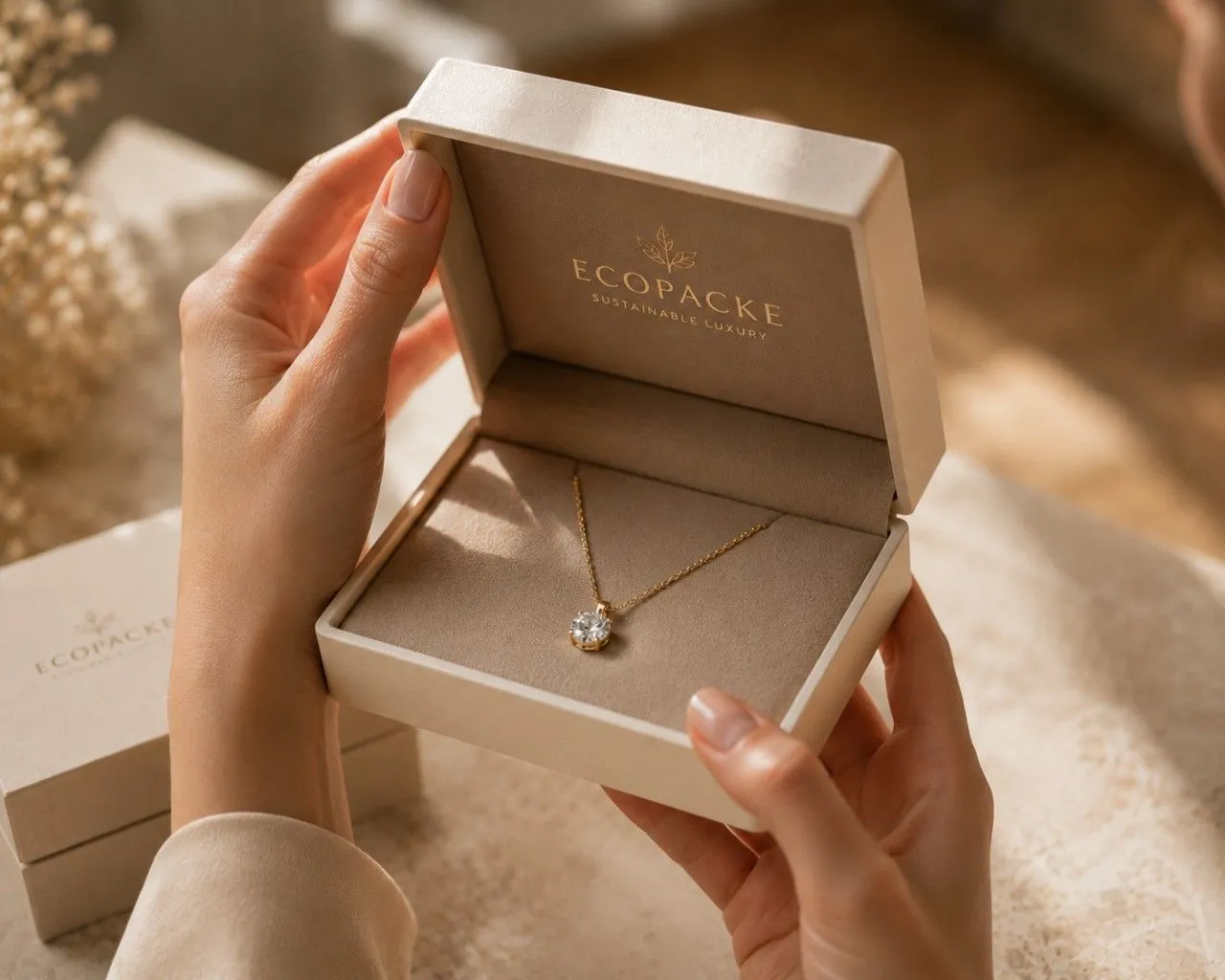
75% of organizations have established sustainable packaging commitments.
Paper and cardboard are among the packaging materials most often perceived as sustainable by European consumers.
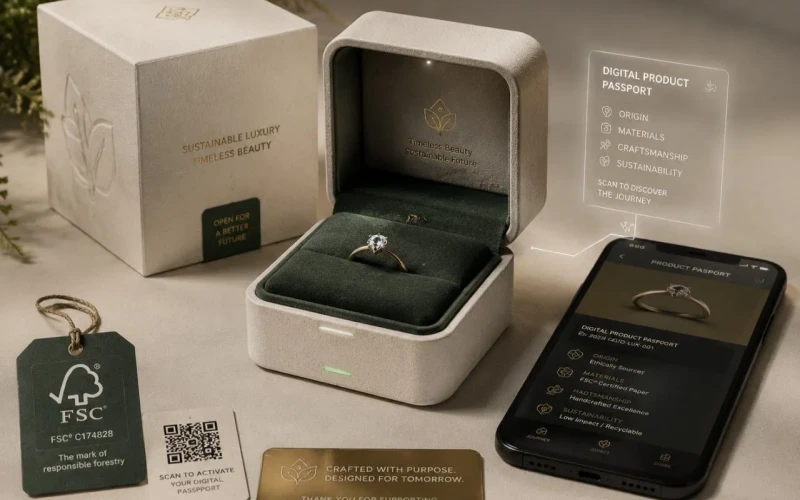
The EU Ecodesign for Sustainable Products Regulation (ESPR) is driving the adoption of Digital Product Passports to improve transparency and circularity.
Leading luxury groups such as LVMH are already implementing Digital Product Passports to provide customers with verified product lifecycle information.
Many people still imagine sustainable packaging as plain brown cardboard.
That perception is outdated.
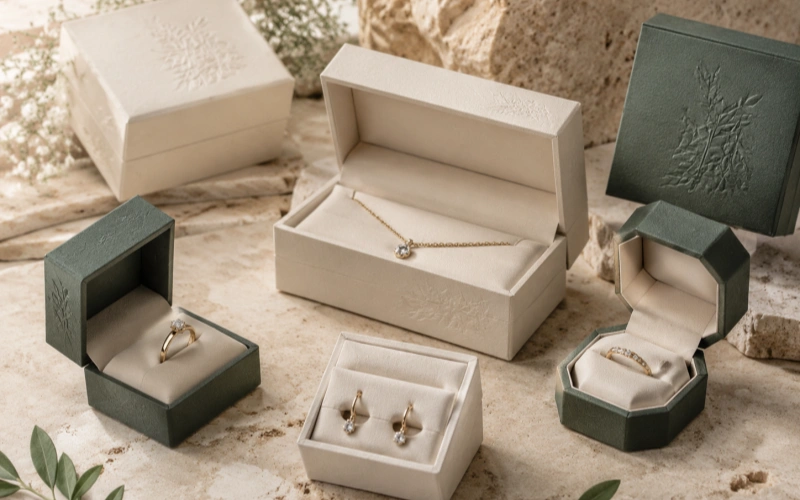
Modern eco-friendly jewelry packaging includes:
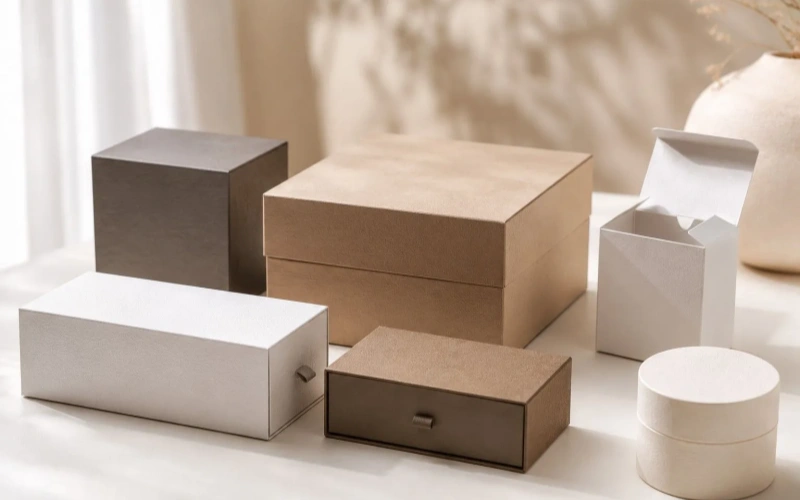
- FSC-certified rigid boxes
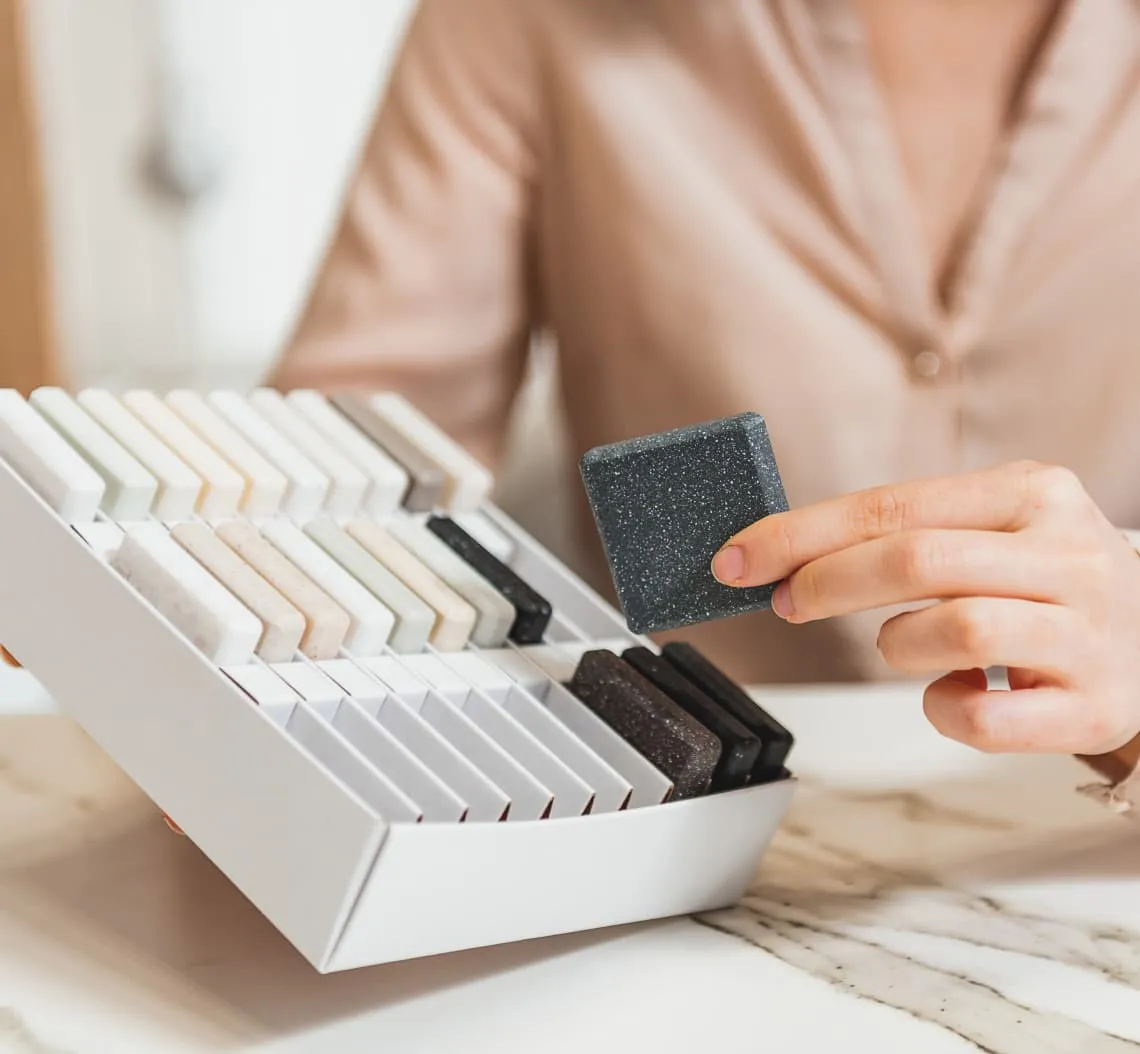
- Premium textured specialty papers
- Recycled luxury paperboard
- Water-based coatings
- Soy-based inks
- Plastic-free inserts
- Molded pulp alternatives
- Cotton fabric linings
- Natural fiber ribbons
- Recyclable magnetic box designs
With advanced printing technologies, sustainable materials can achieve:
- Foil stamping
- Embossing
- Debossing
- Spot UV alternatives
- High-definition offset printing
- Soft-touch finishes
- Premium color consistency
Luxury aesthetics no longer require environmentally harmful materials.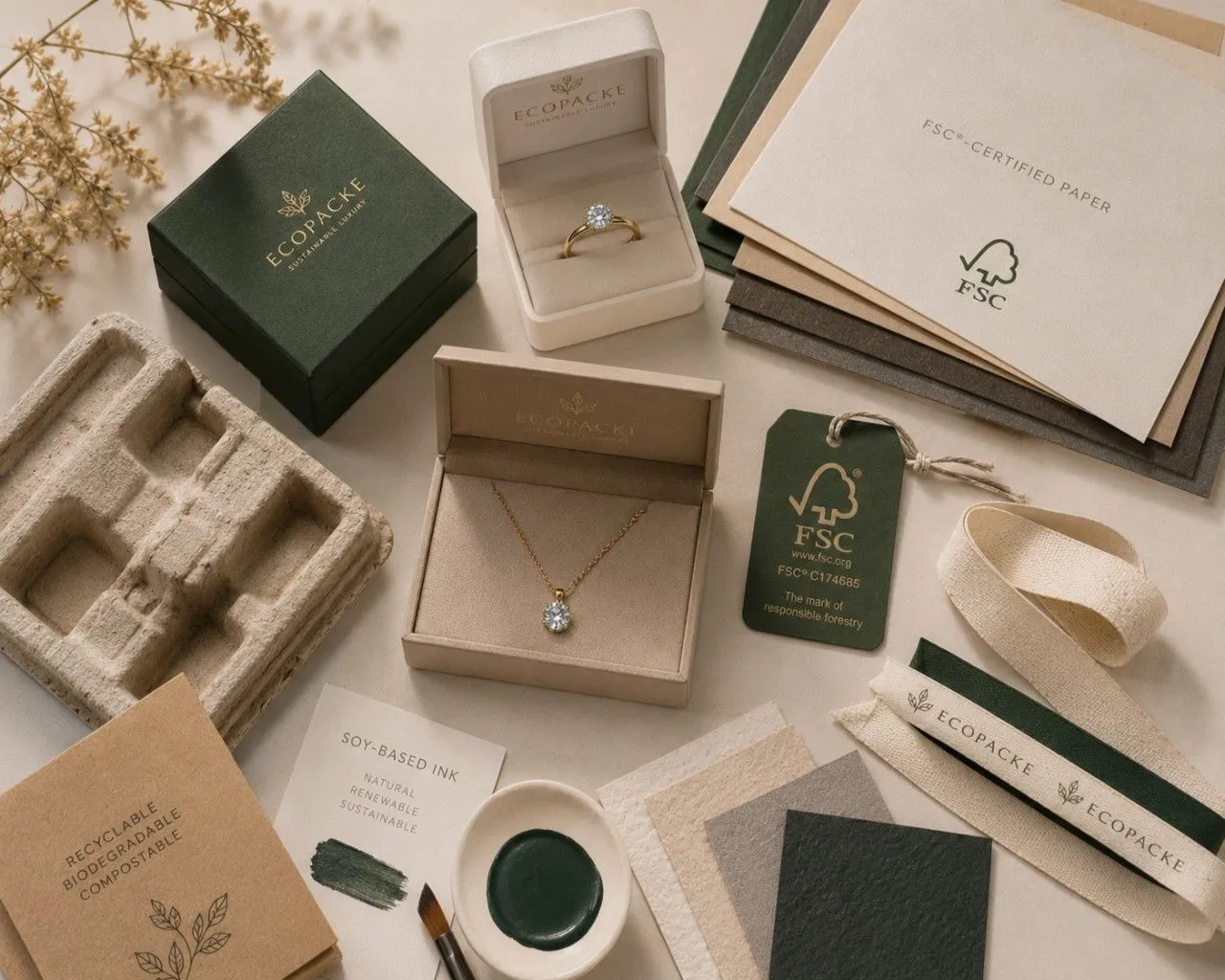
Sustainable Packaging Enhances Brand Storytelling
Consumers love stories.
Packaging provides an opportunity to communicate values before customers even open the box.
Luxury jewelry brands increasingly print messages inside packaging such as:
Crafted responsibly.
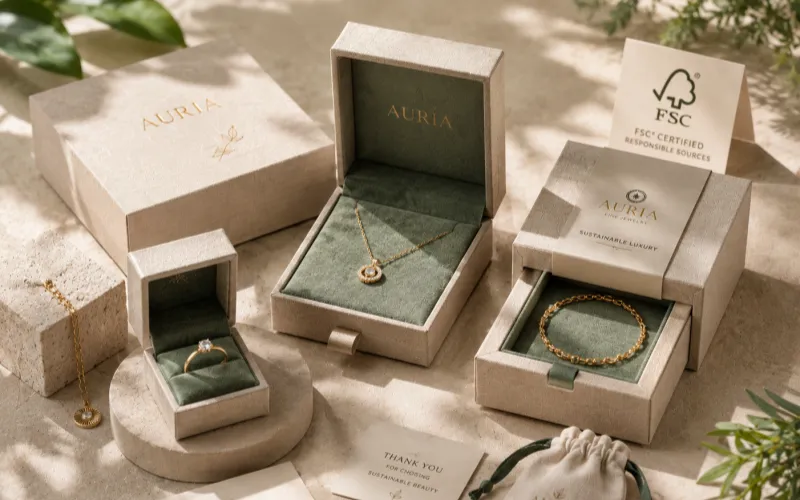
FSC-certified paper.
Designed for reuse.
Please recycle this box.
These small details reinforce authenticity.
Instead of telling customers a brand is sustainable, the packaging allows them to experience it firsthand.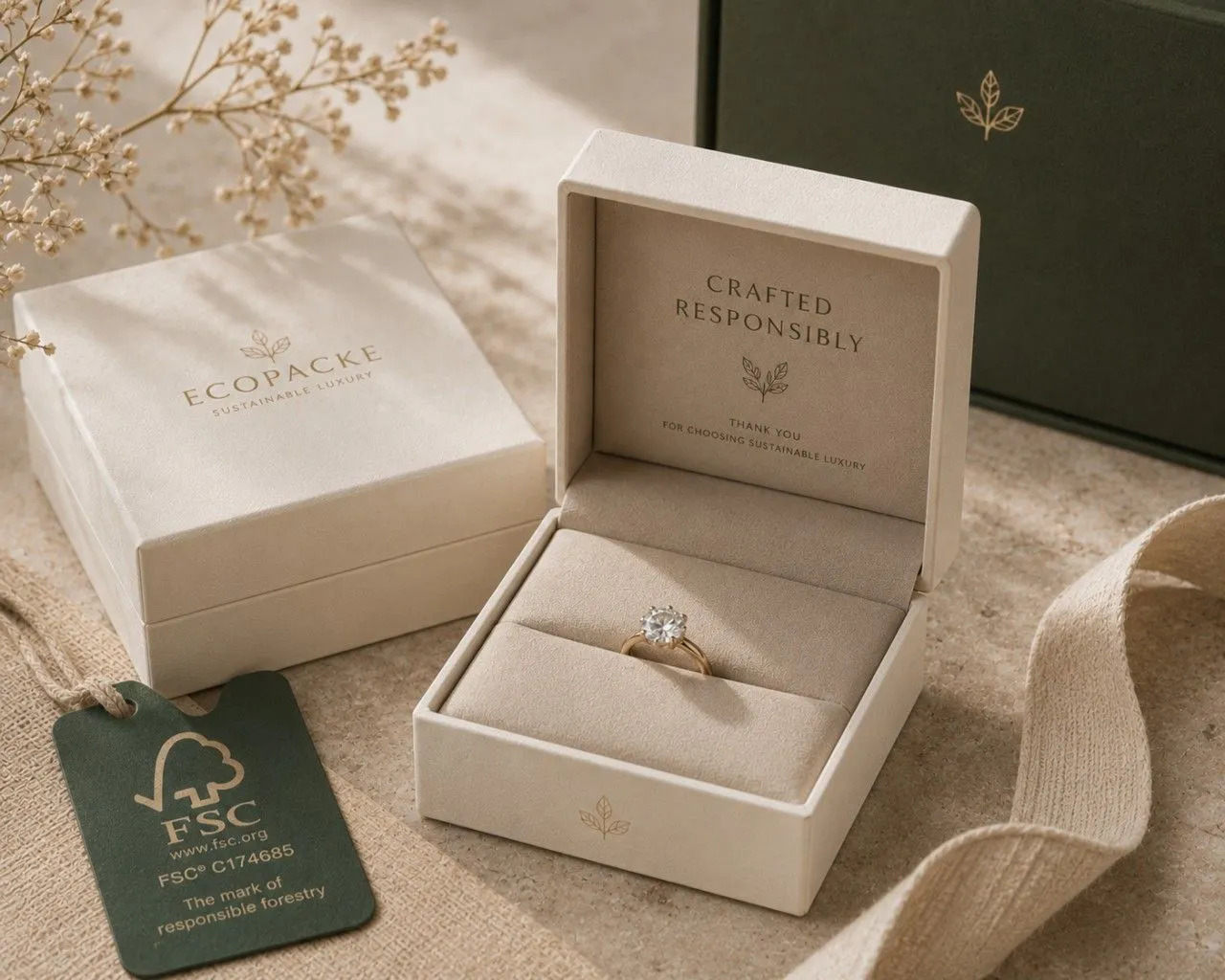
The Rise of “Quiet Luxury”
One of the biggest luxury trends in recent years is quiet luxury.
Rather than bold logos and extravagant decoration, premium brands now favor:
- Minimalist design
- Neutral colors
- Elegant typography
- Understated branding
- High-quality materials
- Exceptional craftsmanship
Eco-friendly jewelry packaging naturally complements this aesthetic.
Simple design often requires fewer materials while appearing even more sophisticated.
Less decoration often communicates greater confidence.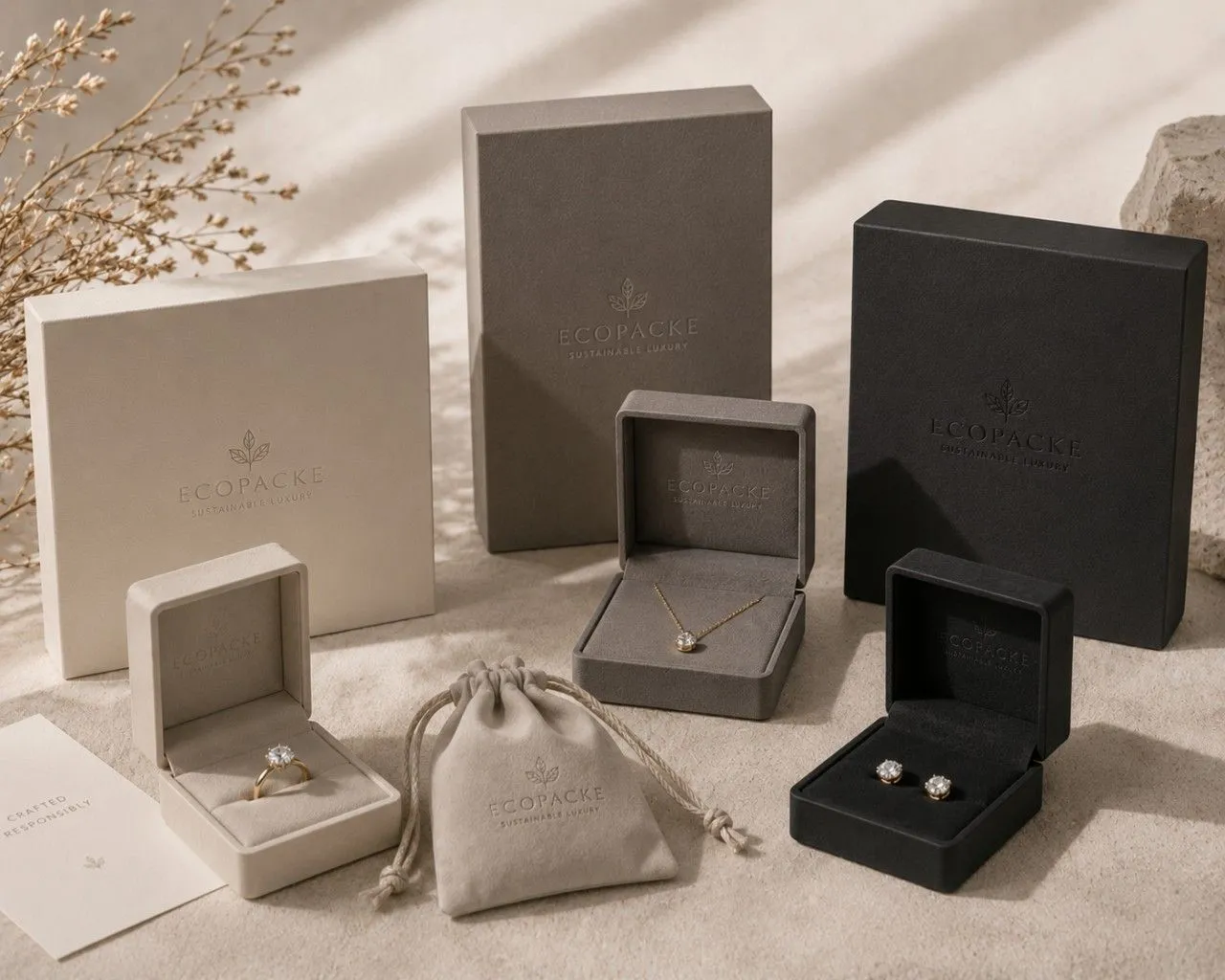
Why Reusable Packaging Matters
Luxury packaging shouldn’t end its journey after unboxing.
Consumers increasingly keep premium jewelry boxes for:
- Jewelry storage
- Travel organization
- Gift presentation
- Home decoration
- Keepsake storage
Reusable packaging extends the brand experience for years.
Every time customers reopen the box, they reconnect with the brand.
This creates ongoing brand exposure without additional marketing investment.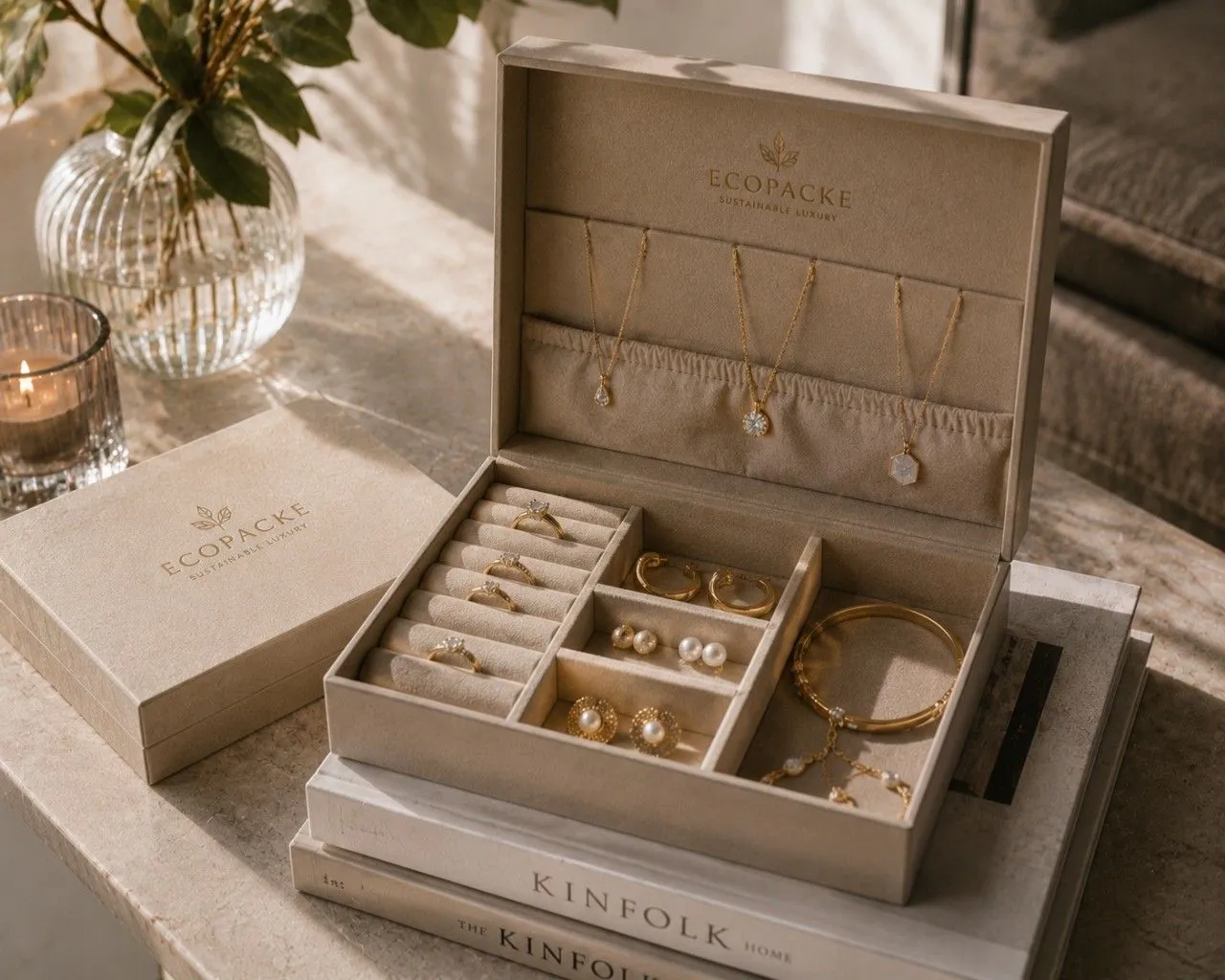
Trust is one of the most valuable assets in luxury branding.
Consumers are becoming more skeptical of vague sustainability claims.
Instead, they look for tangible evidence.
Examples include:
- FSC-certified paper
- Recyclable materials
- Plastic-free construction
- Responsible sourcing information
- Transparent manufacturing processes
- Reduced packaging waste
When brands communicate these efforts honestly, customers perceive them as more credible and trustworthy.
Eco-Friendly Packaging Supports Premium Pricing
One concern among brands is whether sustainable packaging increases costs.
While some eco-friendly materials may have higher initial costs, premium packaging often generates greater overall value by:
- Increasing perceived product quality
- Improving customer satisfaction
- Encouraging repeat purchases
- Creating stronger brand differentiation
- Generating social media sharing
- Supporting higher product pricing
Consumers are often willing to pay more when they believe a product aligns with both luxury and sustainability.
Social Media Makes Packaging More Important Than Ever
The unboxing experience has become free marketing.
Customers frequently share luxury purchases on platforms like Instagram, TikTok, Pinterest, and YouTube.
Beautiful packaging encourages:
- User-generated content
- Product photography
- Influencer collaborations
- Organic brand exposure
- Word-of-mouth recommendations
Eco-friendly messaging adds another layer of shareability.
Consumers enjoy supporting brands that align with their values.
Luxury packaging is becoming smarter.
Many premium jewelry brands are incorporating:
Customers can access:
- Product authenticity
- Care instructions
- Brand story
- Sustainability information
- Warranty registration
Digital Product Passports
Emerging regulations and luxury trends are driving the adoption of Digital Product Passports (DPPs), which can improve traceability, verify authenticity, and provide lifecycle information for products.
NFC Technology
Some luxury brands are exploring NFC-enabled packaging for authentication, exclusive content, and customer engagement.
These digital features reduce the need for printed materials while enhancing the customer experience.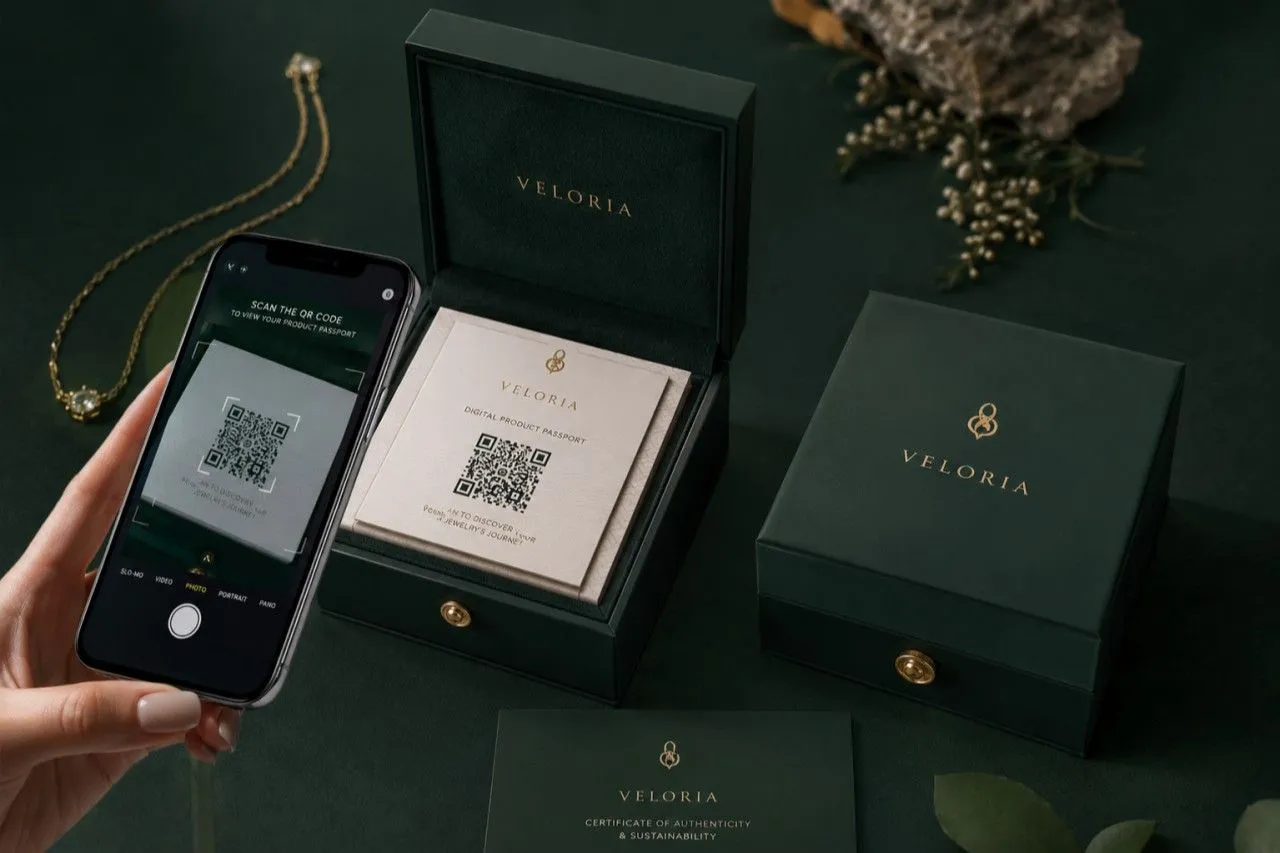
What Jewelry Brands Look for in a Packaging Manufacturer
Luxury brands are no longer searching only for suppliers.
They’re looking for long-term packaging partners.
An ideal manufacturer should offer:
Design Support
From structural engineering to luxury branding consultation.
Material Expertise
Recommendations for sustainable yet premium materials.
Manufacturing Consistency
Reliable quality across every production batch.
Customization
Tailored sizes, inserts, finishes, and branding elements.
Sustainability Certifications
Support for FSC-certified materials and environmentally responsible production.
Scalable Production
Whether launching a boutique collection or supplying global retail networks.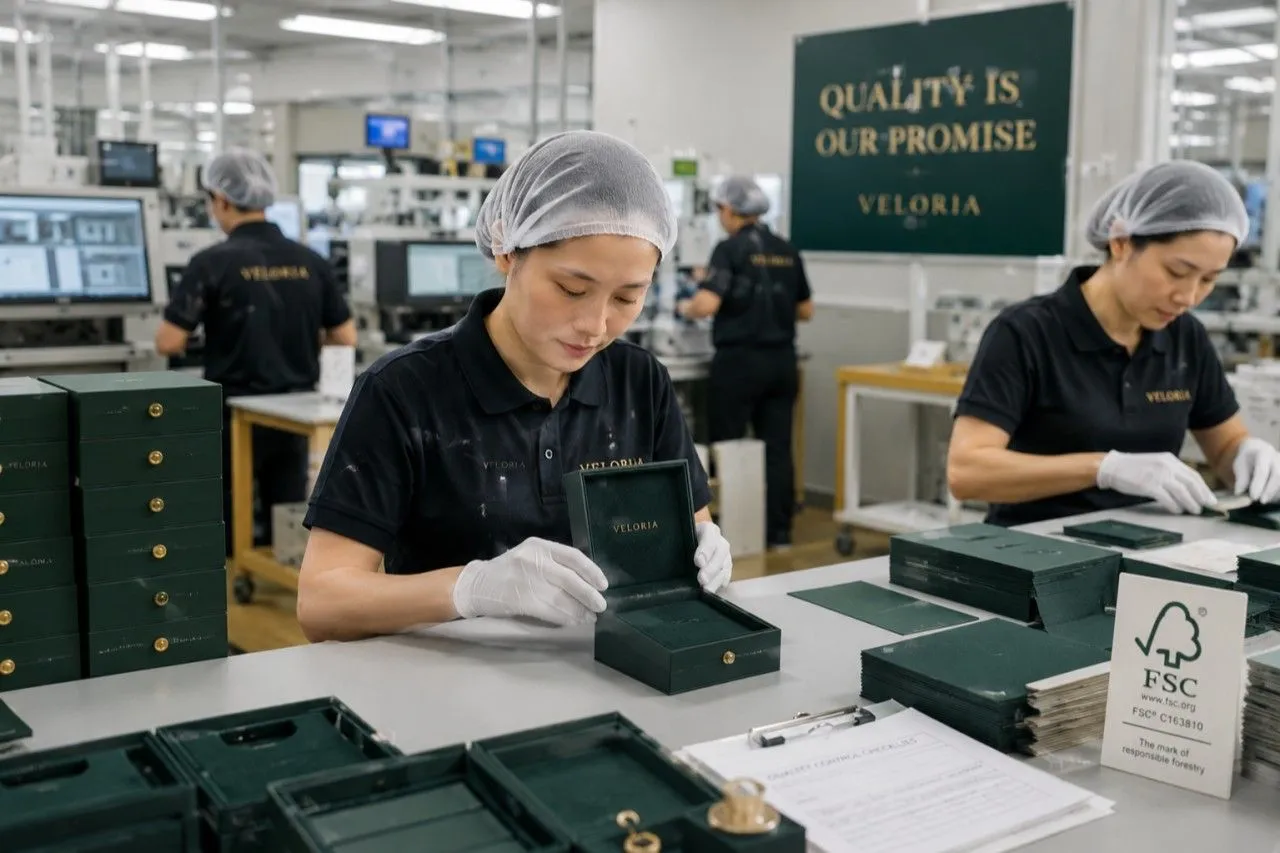
How EcoPacke Helps Luxury Jewelry Brands
At EcoPacke, we understand that luxury packaging must deliver more than protection.
It should communicate craftsmanship, sustainability, and brand identity from the very first touch.
Our custom jewelry packaging solutions include:
- FSC-certified paper materials
- Premium rigid boxes
- Recyclable structural designs
- Plastic-free packaging options
- Luxury finishing techniques
- Custom inserts for rings, necklaces, earrings, and bracelets
- Low MOQ customization
- OEM & ODM manufacturing
- Global shipping support
Whether you’re launching a new jewelry collection or upgrading an existing packaging line, we help transform packaging into a memorable brand experience.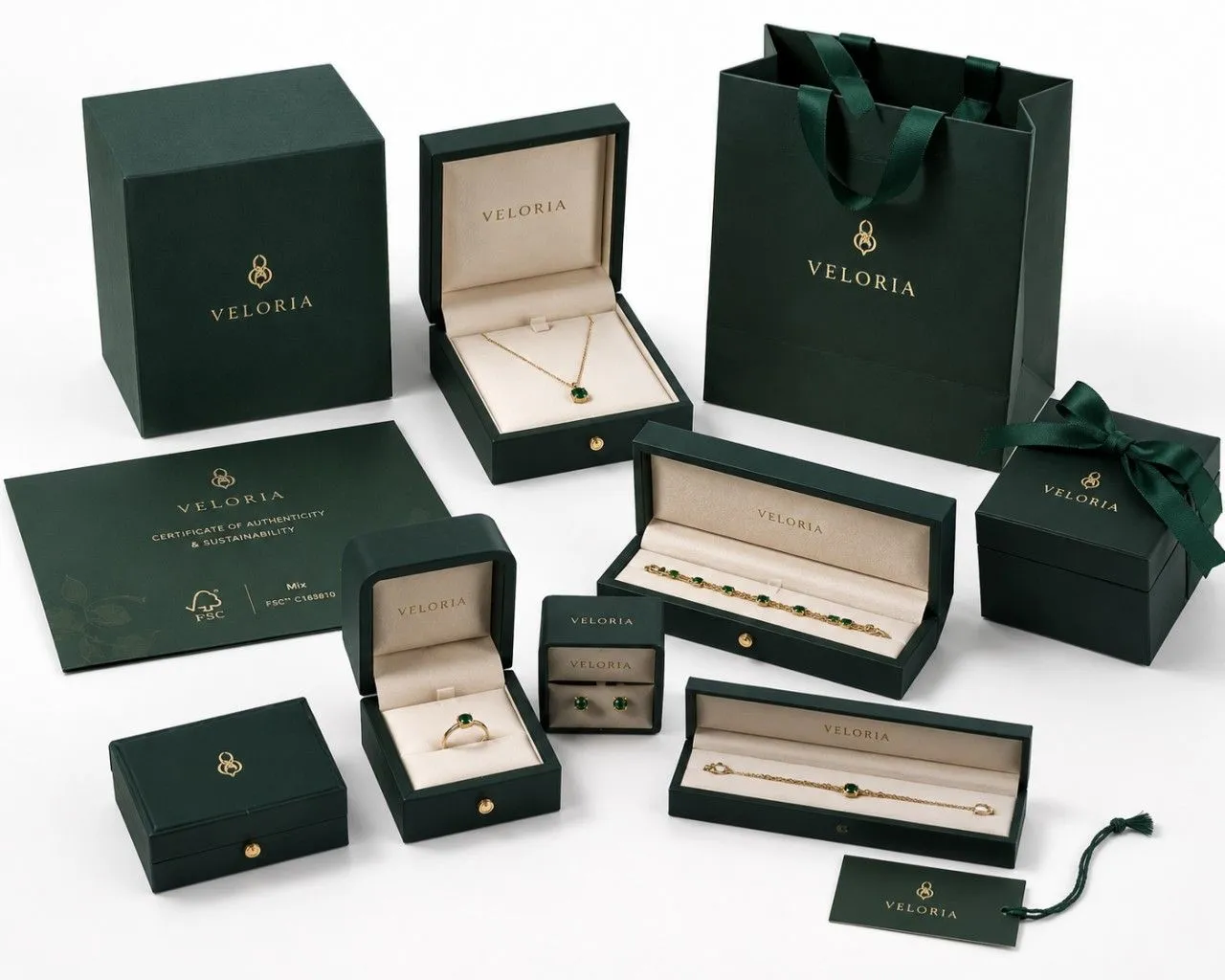
Looking ahead, several trends are expected to shape the luxury packaging industry:
Circular Packaging Design
Packaging designed for reuse, recycling, or easy material recovery.
Lightweight Luxury
Reducing material use while maintaining a premium appearance and protective performance.
Bio-Based Materials
Growing adoption of renewable fibers and biodegradable materials where appropriate.
Digital Product Passports
Providing consumers with transparent information about product origin, materials, and sustainability.
AI-Driven Packaging Design
Using artificial intelligence to optimize packaging structures, reduce waste, and improve production efficiency.
Personalized Packaging
Short-run digital printing enables luxury brands to deliver customized packaging experiences without large inventories.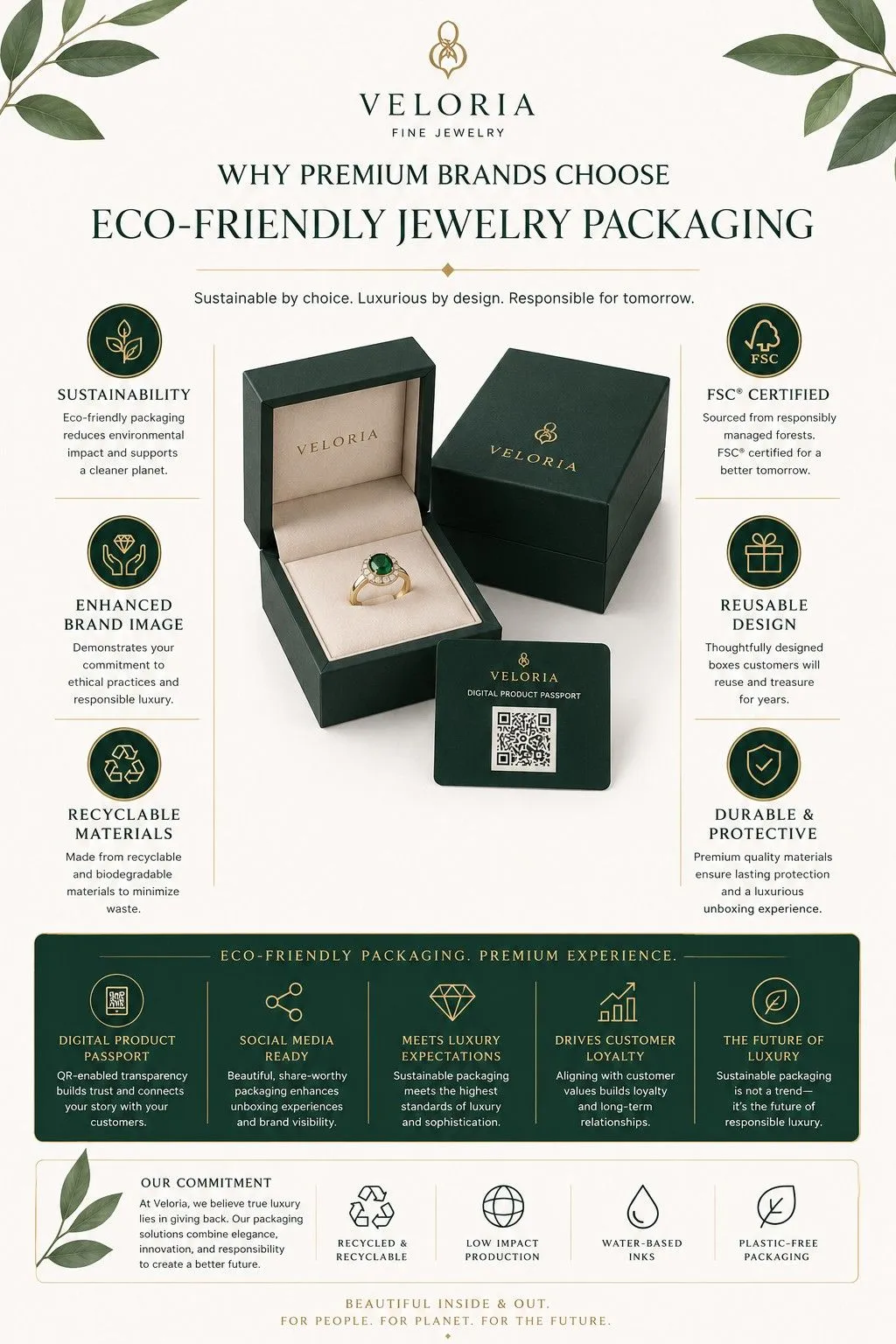
Conclusion
Eco-friendly jewelry packaging is no longer a niche trend—it is becoming a defining feature of modern luxury.
Today’s consumers expect brands to deliver exceptional quality while demonstrating environmental responsibility. The most successful jewelry brands recognize that sustainable packaging is not simply an operational choice; it is a strategic investment in customer experience, brand perception, and long-term competitiveness.
By combining premium materials, elegant design, responsible sourcing, and innovative technologies, luxury packaging can create lasting emotional connections that extend far beyond the initial purchase.
For jewelry brands seeking to differentiate themselves in an increasingly competitive market, eco-friendly packaging is not just good for the planet—it is good for business.